Same day in Gaziantep
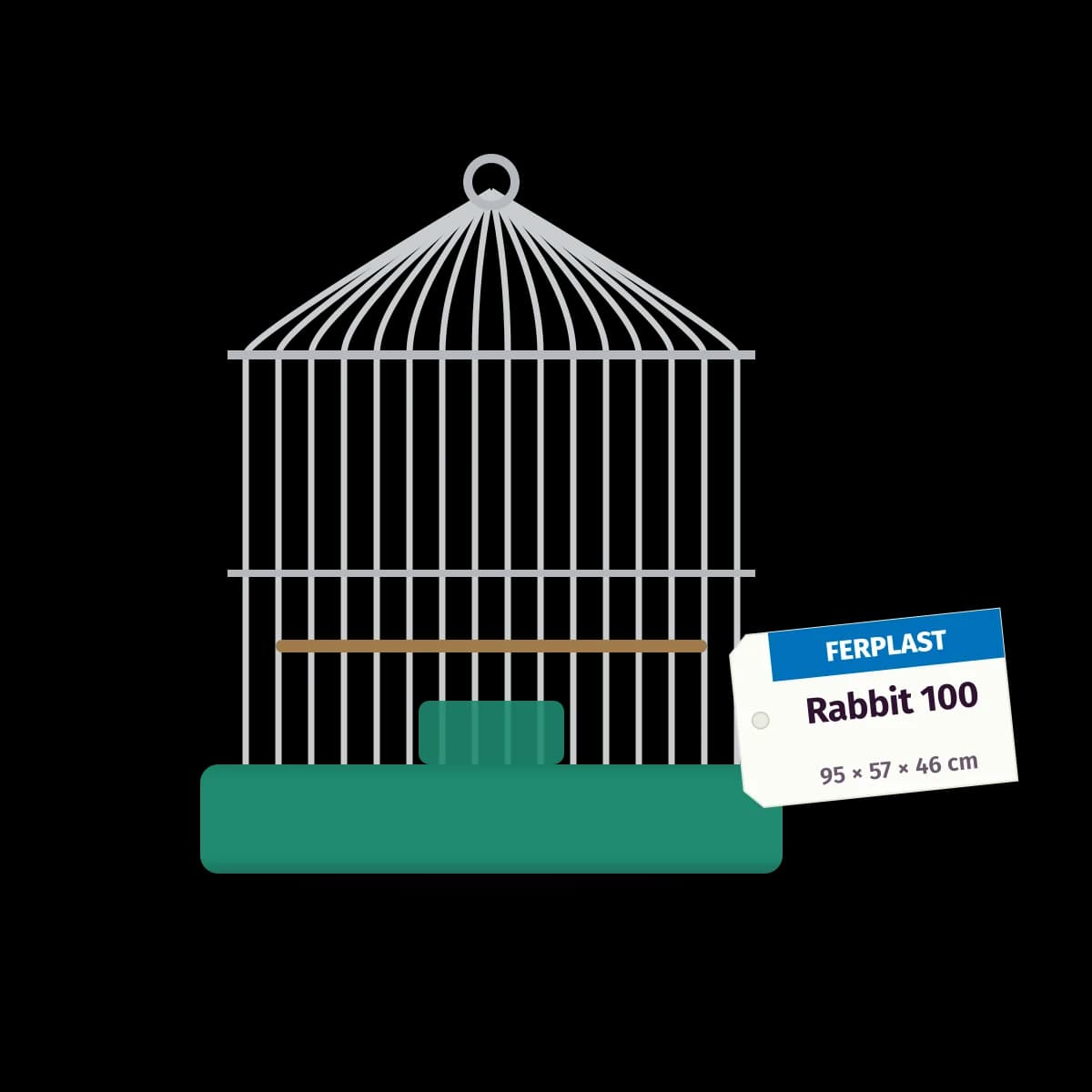
Spacious cages and playpens with safe bar spacing for hamsters, rabbits, guinea pigs and chinchillas.
1 product
With small-pet cages, floor area matters far more than height. Rabbits and guinea pigs spend most of their time on the ground running, hopping and exploring. The small cages often sold in pet shops should only be a starting point for these animals, and daily free time in a safe playpen is essential.
Wire floors can cause sore hocks (pododermatitis), so choose models with a solid plastic base. For small species such as hamsters and mice, bar spacing should not exceed 1 cm or they may escape. Syrian hamsters need a solid-surface wheel at least 28 cm in diameter; smaller wheels force the spine to arch.
Place the cage out of direct sunlight, away from draughts and noise. Rabbits, guinea pigs and chinchillas are very sensitive to heat; if the room goes above 25 °C in summer, provide a cool corner and a frozen water bottle to lie against. Every cage needs a hide, a heavy ceramic food bowl and a drip-feed water bottle.
It is not recommended. Rabbits need several hours a day of free running in a safe area, with the cage used as a base.
Spot-clean the toilet corner every 2–3 days and do a full clean every 2–4 weeks. Leave some old bedding so the nest is not lost entirely.
Syrian hamsters must live alone or they will fight. Some dwarf species can live in same-sex pairs, but still need plenty of space and two hides.