Heating & UV
Basking lamps, heat mats, thermostats and UVB tubes to give your reptile the right heat and light.

Reptiles are ectothermic: they take their body heat from their surroundings, and digestion, immunity and activity all depend directly on temperature. A terrarium therefore needs a gradient running from a hot basking spot to a cooler end, not a single uniform temperature. For a bearded dragon, for example, the basking spot should be around 38–42 °C and the cool end around 24–27 °C.
Why UVB is essential
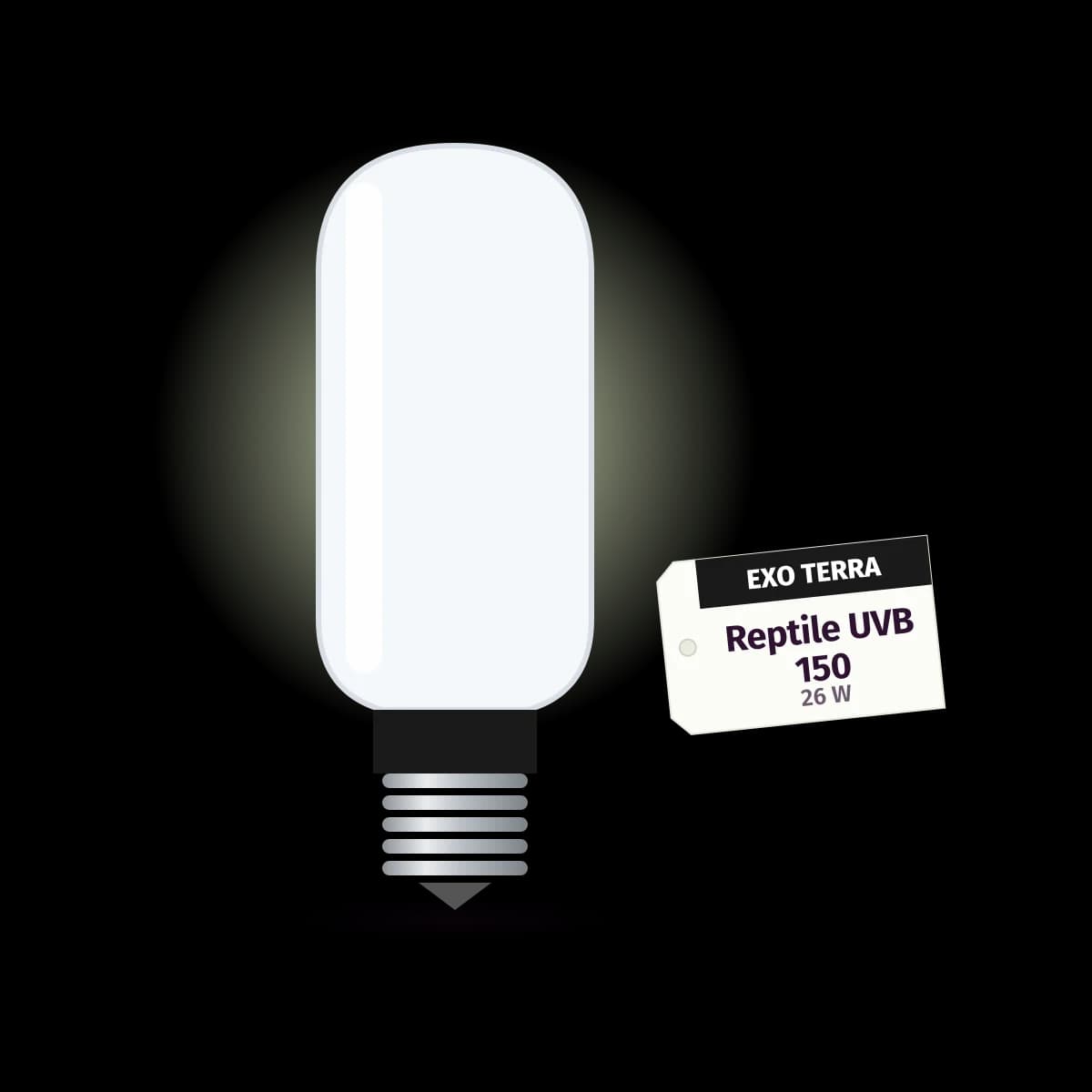
Day-active reptiles make vitamin D3 in their skin under UVB light. Without UVB, dietary calcium cannot be used and metabolic bone disease develops. Points to watch:
- Choose a UVB output to suit the species (10–12% for desert species, 5–6% for forest species).
- Glass and acrylic block UVB, so the lamp must sit above the mesh or inside the enclosure.
- Replace UVB tubes every 6–12 months even if they still light up, because UVB output fades over time.
Every heat source should run through a thermostat. Heat mats and ceramic heaters without one can overheat and cause burns. Monitor temperatures with two digital thermometers, one at each end, or an infrared thermometer, rather than relying on a single reading.
If night-time heat is needed, use a non-light-emitting ceramic heater or mat; coloured night bulbs disrupt sleep. Putting the lights on a timer for 12–14 hours a day keeps the day–night cycle consistent.
Common questions about Heating & UV
How often should a UVB lamp be replaced?
Standard fluorescent tubes every 6–12 months; quality T5 tubes around every 12 months, per the manufacturer. UVB output drops even while the lamp still lights.
Can I use a heat mat without a thermostat?
It is not recommended. Mats can exceed 50 °C and cause serious burns. Run every heater through a thermostat.
Should the lights be off at night?
Yes. Reptiles need a day–night cycle. If the room gets too cold, use a ceramic heater that gives off no light.