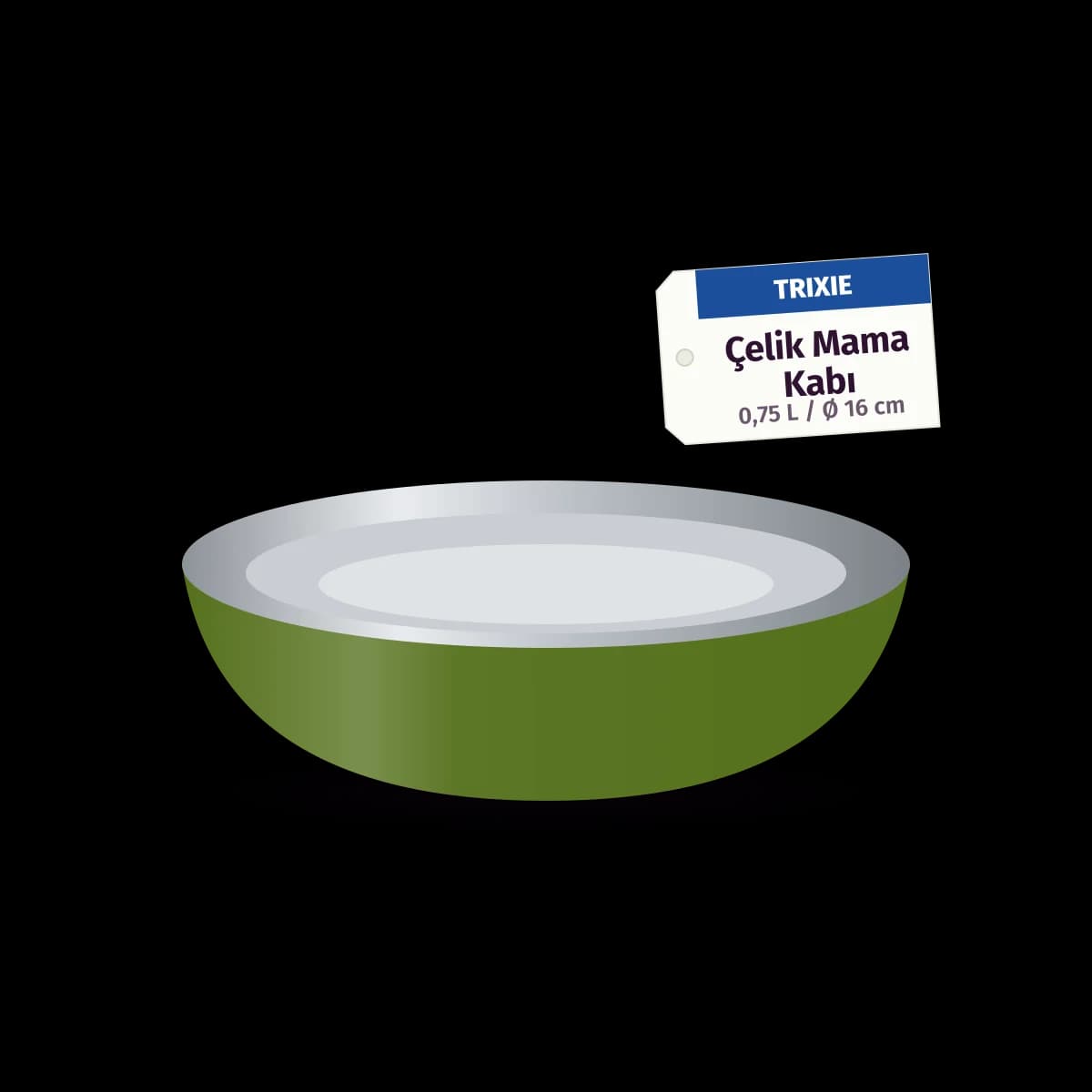
Bowls
Stainless steel and ceramic bowls, slow feeders, raised stands and water fountains for healthier mealtimes.
1 product
A bowl may look like a simple purchase, but its material, size and design affect how fast your dog eats, how hygienic mealtimes are and even how comfortably they digest. Matching the bowl to your dog’s breed and eating habits makes daily feeding more orderly.
Comparing materials
- **Stainless steel:** Unbreakable, does not harbour bacteria and is dishwasher-safe; the most hygienic, longest-lasting option.
- **Ceramic:** Heavy, so it does not slide or tip over, and it keeps water cool; replace it as soon as it chips or cracks.
- **Plastic:** Light and inexpensive, but it scratches over time and bacteria can build up in the scratches; it is sometimes linked to chin acne.
For dogs who finish their food in seconds, maze-patterned slow feeders reduce air gulping and vomiting and make for calmer digestion. Raised stands give large and giant breeds a more comfortable posture for the neck and back; set the height roughly level with your dog’s elbow.
Water bowls should be emptied, washed and refilled with fresh water every day. In hot summer weather, keeping more than one water bowl around the house or using a filtered fountain encourages your dog to drink enough. Collapsible silicone bowls and lidded water bottles are practical for walks and trips.
Common questions about Bowls
Which bowl material is most hygienic?
Stainless steel does not scratch, does not harbour bacteria and is dishwasher-safe, so it is considered the most hygienic choice.
What does a slow feeder do?
Its raised ridges make your dog eat more slowly, helping to reduce air gulping, bloating and vomiting after meals.
Are raised bowls suitable for every dog?
They are comfortable for large breeds, senior dogs and dogs with neck or joint problems. If your dog has a specific health condition, follow your vet’s advice.