-%12Same day in Gaziantep
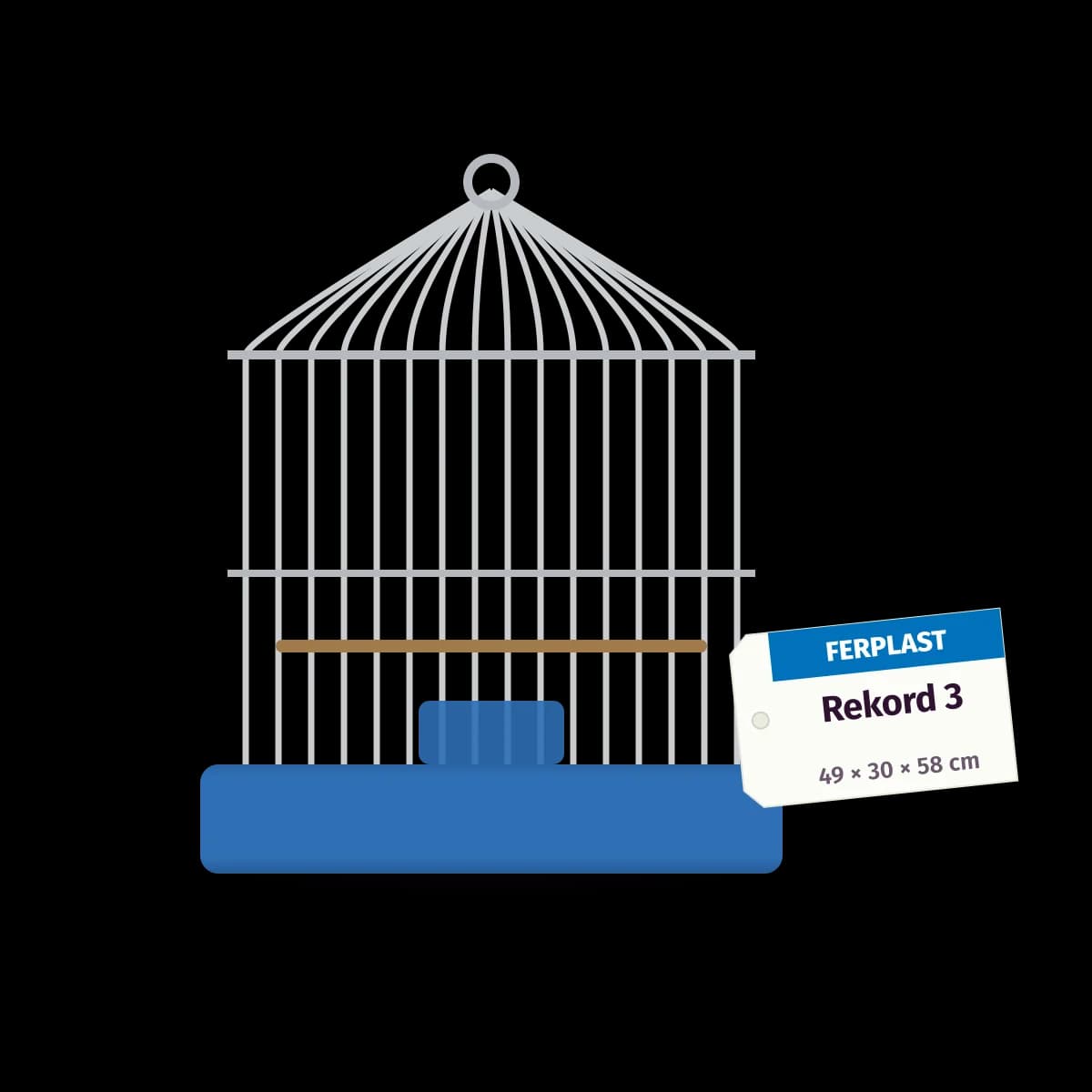
Easy-clean bird cages with bar spacing and dimensions suited to budgies, canaries and parrots.
1 product
A cage is where your bird spends most of its day, so the biggest cage you can accommodate is usually the right choice. Birds fly horizontally rather than up and down, which makes rectangular cages that are wider than they are tall more practical than round ones. For a single budgie, a width of at least 60 cm is a good starting point.
Gaps that are too wide let birds trap their heads or escape. Choose stainless steel or non-toxic powder-coated wire; old cages containing zinc or lead pose a poisoning risk.
A pull-out tray makes cleaning far easier. Fit perches of different diameters (natural wood branches are ideal) so foot muscles get a workout. Place food and water beside the perches rather than beneath them to avoid contamination. Position the cage away from draughts, direct sunlight and kitchen fumes.
Remember that fumes from overheated non-stick pans can be fatal to birds. Placing one side of the cage against a wall helps a bird feel secure, and a height close to eye level makes interaction with people easier. Rotating toys every week or two keeps boredom at bay.
At least 60×40×50 cm for one bird, larger for a pair. Bar spacing should not exceed 1.2 cm.
Change the tray liner and food and water dishes daily, clean perches and toys weekly, and wash the whole cage monthly with hot water and a bird-safe cleaner.
Round cages have no corners where a bird can feel secure, and their flight space is limited. Rectangular cages are a better choice.